Industrial Plate Processing in the UAE: Methods, Applications and Benefits
Steel plates are widely used in construction, manufacturing, engineering, and industrial infrastructure. However, raw steel plates often need additional processing before they can be incorporated into machinery, structural components, tanks, or fabrication projects. Industrial plate processing transforms these materials into components that meet specific design and production requirements.
Across the UAE, industrial businesses and construction companies rely on accurate steel processing to improve production efficiency, reduce material waste, and maintain consistent product quality.
What Is Industrial Plate Processing?
Industrial plate processing involves cutting, shaping, drilling, bending, and preparing steel plates for different industrial applications. These operations allow manufacturers to convert standard steel plates into components with specific dimensions, profiles, and mechanical requirements.
Depending on the project, processing may involve manual operations, conventional machinery, or advanced computer-controlled equipment.
The final objective is to produce accurately manufactured steel components that meet engineering drawings, fabrication specifications, and quality requirements.
- Steel Plate Cutting
Cutting is one of the most common industrial plate processing operations. It involves separating steel plates into smaller sections or specific shapes according to project requirements.
Several cutting methods are used in industrial manufacturing:
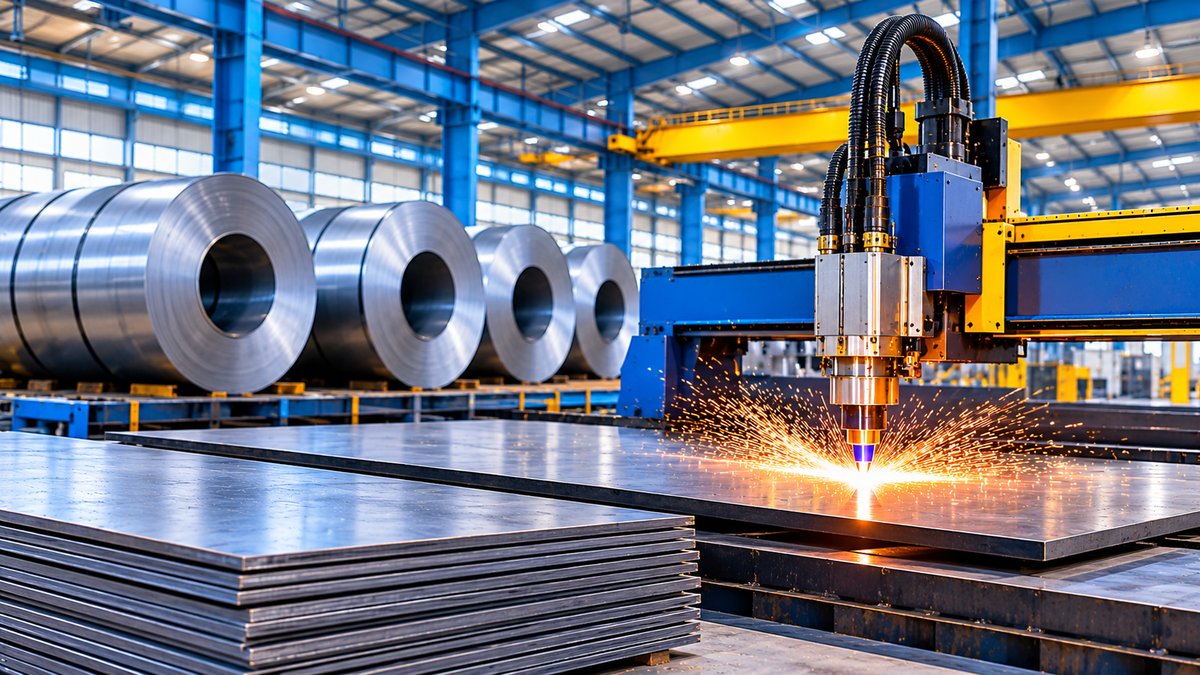
Plasma Cutting: Plasma cutting uses an electrically conductive gas to cut metal. It is commonly used for processing conductive materials and is suitable for various steel plate thicknesses.
Laser Cutting: Laser cutting uses a concentrated laser beam to create accurate cuts and detailed profiles. It is particularly useful for applications requiring precision and consistent dimensions.
Oxy-Fuel Cutting: This process uses oxygen and fuel gas to cut suitable steel materials. Commonly used for thicker carbon steel plates in heavy industrial applications.
The appropriate cutting method depends on material thickness, required accuracy, production volume, and the desired edge finish.
- Plate Bending and Forming
Bending and forming operations change the shape of steel plates without separating the material. These processes are important for manufacturing components that require specific angles, curves, or profiles.
Rolling machines can also form plates into cylindrical or curved sections for tanks, vessels, and other industrial structures.
Accurate forming requires consideration of material thickness, grade, bend radius, and springback. Correct machine settings and experienced operators help achieve consistent results.
- Drilling and Hole Processing
Many fabricated steel components require holes for bolts, fasteners, connections, and mechanical assemblies.
Industrial plate drilling uses specialized equipment to create holes according to engineering drawings. Depending on the application, operations may include conventional drilling, CNC drilling, punching, and other machining techniques.
Correct hole positioning and dimensions are essential for ensuring that fabricated components fit properly during assembly.
- Applications Across UAE Industries
Industrial plate processing supports several important sectors across the UAE.
Construction and Infrastructure: Processed steel plates are used in structural connections, base plates, brackets, support systems, and fabricated building components.
Oil and Gas: Industrial facilities require steel components for equipment supports, structural frameworks, pipelines, and other engineered installations. Material selection must follow the applicable project specifications.
Manufacturing: Factories use processed plates to manufacture machinery frames, equipment enclosures, industrial components, and production systems.
Marine and Transportation: Steel plate fabrication supports selected marine structures, transport equipment, and infrastructure components.
These applications demonstrate why accurate plate processing is important for industrial production and construction projects.
- Benefits of Professional Steel Plate Processing
Using professional industrial plate processing services offers several advantages.
- Improved accuracy: Modern processing equipment helps achieve consistent dimensions and profiles.
- Reduced material waste: Proper cutting plans can improve material utilization.
- Better production efficiency: Specialized machinery can streamline repetitive manufacturing operations.
- Consistent quality: Controlled processing methods help maintain uniformity across production batches.
- Project flexibility: Custom cutting and forming allow manufacturers to produce components for specific applications.
These benefits can support better coordination between material suppliers, fabrication workshops, engineers, and contractors.
- Choosing an Industrial Plate Processing Partner
Selecting the right processing company requires evaluating its machinery, technical capabilities, experience, and quality control procedures.
Before placing an order, provide accurate engineering drawings and confirm the material grade, plate thickness, dimensions, cutting tolerances, and required finishing operations.
It is also important to discuss production capacity, delivery schedules, inspection procedures, and documentation requirements.
A capable processing partner should understand the technical demands of the project and communicate clearly throughout production.
Importance of Industrial Plate
Industrial plate processing is an important part of the UAE’s construction and manufacturing supply chain. Cutting, bending, drilling, and forming operations help transform standard steel plates into components suitable for specialized industrial applications.
By choosing appropriate processing methods and working with experienced service providers, businesses can improve manufacturing accuracy, manage material costs, and maintain consistent production standards. Quality processing remains essential for supporting demanding industrial and infrastructure projects across the UAE.